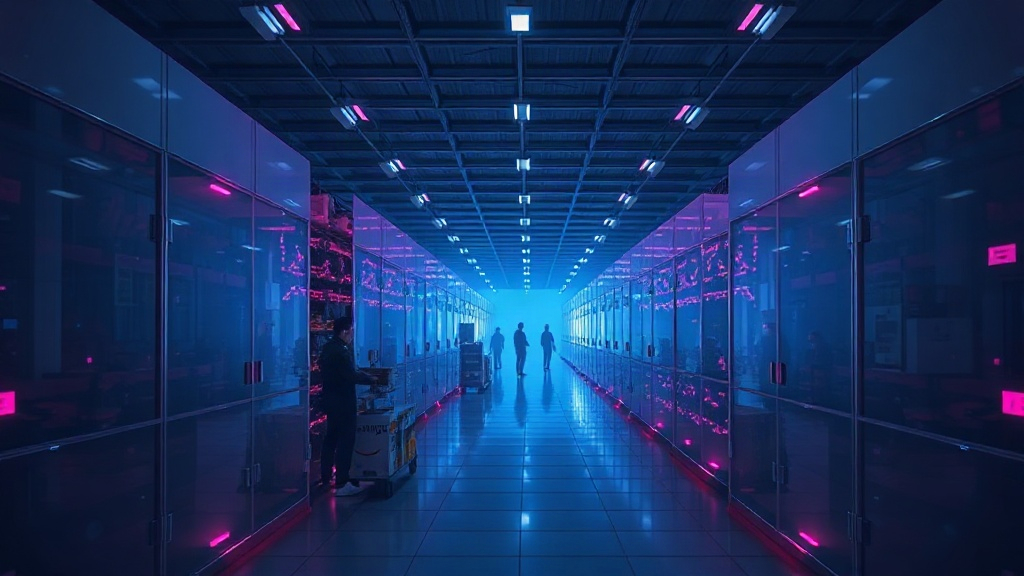
Amazon’s latest robotics milestone is more than a scale story. The company has now deployed its one millionth robot, extending a fleet that already operates across more than 300 facilities worldwide. At the same time, it is introducing DeepFleet, a generative AI foundation model meant to coordinate robot movement and improve travel efficiency by 10%. Together, the two developments show Amazon pushing deeper into automated logistics while trying to translate technical gains into faster delivery and lower costs.
The new system builds on a decade of robotics investment that began with the 2012 acquisition of Kiva Systems. Amazon now uses a mix of wheeled mobile robots, including Hercules, Pegasus, Titan, and Proteus, alongside a growing number of robotic arms. The company says these machines handle heavy lifting, repetitive movement, and inventory coordination, while employees focus on other tasks. Amazon also says it has upskilled more than 700,000 workers since 2019, and that advanced robotics have created more demand for reliability, maintenance, and engineering roles in newer facilities. DeepFleet is built on Amazon’s own operational data and AWS tools, including SageMaker, and is designed to predict congestion before it slows warehouse traffic.
The broader significance lies in how Amazon is reshaping both labor and logistics at once. The company is still one of the world’s largest employers, with more than 1.5 million full-time and part-time workers, even as it expands robotic capacity. Amazon argues automation reduces physical strain and improves safety in a sector known for high injury rates. Critics and labor researchers counter that collaborative robots can also intensify work by dictating pace and increasing physical proximity to machines.
What happens next will matter well beyond Amazon. The company is building more robot factories and expects to expand its robotic arm fleet, suggesting automation will keep accelerating. If DeepFleet delivers as promised, Amazon could store more inventory closer to customers and compress delivery times further. The unresolved question is whether those gains will primarily improve working conditions, or whether they will simply raise the bar for human labor inside already demanding fulfillment centers.